
The History of Chiropractic, Upper Cervical Specific Care and The Philosophy

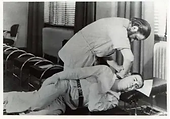

The Founding of Chiropractic: D.D. Palmer's Era (1845–1913) Chiropractic as a distinct health profession traces its origins to the late 19th century in the United States, specifically to Daniel David (D.D.) Palmer, a self-taught magnetic healer born in Canada who had relocated to Davenport, Iowa. Palmer's background included interests in spiritualism, vitalism, and alternative healing methods, which influenced his development of chiropractic principles. The pivotal moment came on September 18, 1895, when Palmer performed what is widely recognized as the first chiropractic adjustment. He treated Harvey Lillard, a janitor who had been partially deaf for 17 years following a back injury. Palmer identified a misalignment (later termed a "subluxation") in Lillard's upper spine and manually adjusted it, reportedly restoring Lillard's hearing within days.
This event sparked Palmer's theory that misalignments in the spine could interfere with the nervous system's function, leading to various health issues. He posited that 95% of diseases stemmed from these subluxations, which disrupted the body's "Innate Intelligence"—a vitalistic concept describing an inherent self-healing force.
Palmer coined the term "chiropractic" in 1896 with the help of his friend Rev. Samuel Weed, deriving it from the Greek words cheir (hand) and praktos (done), emphasizing manual adjustments.
Initially, he hoped to keep the method a family secret, but by 1897, he established the Palmer School of Chiropractic (now Palmer College of Chiropractic) in Davenport, the first institution dedicated to teaching the practice.
Early chiropractic drew parallels to osteopathy (founded by Andrew Taylor Still in 1874), both emphasizing manual manipulation, but Palmer differentiated his approach by focusing on short-lever, high-velocity thrusts targeting specific spinal segments, particularly the spinous and transverse processes.
However, the profession faced immediate resistance from the medical establishment. Chiropractors were often accused of practicing medicine without a license, leading to numerous arrests. D.D. Palmer himself was jailed in 1906 for unlicensed practice and fined, highlighting the tension between emerging alternative therapies and conventional medicine.
Despite these challenges, early graduates like Solon M. Langworthy (who opened a rival school in 1903) and Shegataro Morikubo helped expand the field, with Langworthy publishing the first chiropractic textbook, Modernized Chiropractic, in 1906, which formalized the concept of subluxations.
Palmer's philosophy evolved in his later years, refining subluxation theory to emphasize nerve vibration and tone. He authored The Chiropractor's Adjuster in 1910, solidifying his ideas. Tragically, D.D. Palmer died in 1913 under disputed circumstances—officially from typhoid fever, but amid rumors of foul play involving a strained relationship with his son, B.J. Palmer.
Transition and Expansion: B.J. Palmer's Leadership (1882–1961) Bartlett Joshua (B.J.) Palmer, D.D.'s son, assumed control of the Palmer School in 1906 at age 24, marking a new era of growth and professionalization.
Under B.J., enrollment surged to over 1,000 students by the early 1920s, and he emphasized formal training, research, and a philosophical framework positioning chiropractic as a "science, art, and philosophy."
He invoked religious imagery in his teachings and briefly considered declaring chiropractic a religion to evade medical regulations, but ultimately refrained to avoid confusion with Christian Science.
B.J. embraced technology, introducing spinal X-rays (which he called "spinography") in 1910 to enhance diagnostic accuracy.
He also invented the neurocalometer in the 1920s, a device to detect nerve interference, though it sparked controversy and division within the profession.
Legally, B.J. formed the Universal Chiropractors' Association (UCA) in 1906 (formalized in 1907) to provide legal defense for arrested practitioners.
A landmark victory came in 1907 with the Morikubo trial in Wisconsin, where chiropractic was legally distinguished from osteopathy by its focus on nerve supremacy rather than arterial flow, using philosophical arguments to secure acquittal.
B.J. deepened the profession's schism between "straights" (who adhered strictly to adjustments and subluxation theory) and "mixers" (who incorporated other therapies like naturopathy).
As a staunch straight, he rejected mixers, leading to the formation of the American Chiropractic Association (ACA) by mixers in 1922 to promote broader education and research.
Despite opposition from the American Medical Association (AMA), which labeled chiropractic an "unscientific cult" and sought to suppress it through the 1960s, B.J.'s efforts helped chiropractic gain licensure in all U.S. states by 1974 (starting with Kansas in 1913).
The Emergence of Upper Cervical Care Under B.J. Palmer Upper Cervical chiropractic, a specialized branch focusing on the top two vertebrae (atlas/C1 and axis/C2), evolved directly from B.J. Palmer's innovations in the early 20th century.
While D.D. Palmer's work laid the groundwork by emphasizing spinal subluxations' impact on the nervous system, B.J. is credited as the first Upper Cervical chiropractor.
In the 1920s and 1930s, while running the Palmer School and clinic, B.J. observed inconsistent results from full-spine adjustments. He began experimenting with targeted corrections of the most severe misalignments, finding that adjustments to the upper cervical region produced superior outcomes for a wide range of conditions.
This led to the development of the Hole-in-One (HIO) technique around 1930, a precise method involving X-ray-guided, high-velocity, low-amplitude thrusts primarily on the atlas to relieve pressure on the brainstem and restore neurological function.
B.J. emphasized that misalignments here could cause systemic issues like migraines, scoliosis, seizures, and chronic pain by compressing the brainstem, and correcting them allowed the body's Innate Intelligence to heal naturally.
From 1935 to 1955, he operated a dedicated research clinic in Davenport, treating thousands of patients and documenting cases to validate Upper Cervical care's efficacy.
B.J.'s Upper Cervical focus distinguished it from general chiropractic by prioritizing structural shifts in the neck over symptomatic relief elsewhere, laying the foundation for later techniques like Grostic (1940s) and NUCCA (1960s), though these postdate his primary era.
His writings, textbooks, and cadaver studies (tracing nerve pathways) further advanced the field, making Upper Cervical a cornerstone of "straight" chiropractic philosophy.
Legacy from D.D. to B.J. Palmer. The period from D.D. to B.J. Palmer transformed chiropractic from a nascent idea into a structured profession with over 80 schools by the 1920s, despite ongoing battles for legitimacy.
Their vitalistic philosophy persists in some circles, but evidence-based shifts began under B.J.'s research initiatives. Upper Cervical care, pioneered by B.J., remains a specialized, non-invasive approach emphasizing precision and nervous system integrity, influencing modern chiropractic globally.
This era's innovations continue to shape the field, with Palmer College still operating as a hub for chiropractic education.
Upper Cervical Chiropractic History and Technique Comparisons.
The history of Upper Cervical Chiropractic is a specialized branch within the chiropractic profession, emphasizing precise corrections to the upper cervical spine—primarily the atlas (C1) and axis (C2) vertebrae, and their relationship to the skull (craniocervical junction). This approach views misalignments (subluxations) in this critical area as potentially disrupting brainstem function, nerve signaling, and overall body balance, leading to a wide range of health issues beyond just neck pain. Early Foundations: D.D. Palmer and the Origins (1895–1913) While D.D. Palmer founded chiropractic in 1895 with his famous adjustment on Harvey Lillard (restoring hearing via a cervical correction), he did not exclusively focus on the upper cervical region. His work laid the groundwork by highlighting spinal misalignments' impact on the nervous system. Upper cervical concepts emerged more distinctly later.B.J. Palmer's Pivotal Role: The Birth of Modern Upper Cervical Care (1920s–1950s) The true origin of Upper Cervical Chiropractic as a distinct specialty traces to Bartlett Joshua (B.J.) Palmer, D.D. Palmer's son and developer of the Palmer School of Chiropractic.
-
In the late 1920s and early 1930s, B.J. observed inconsistent results from full-spine adjustments in his clinic and research.
-
He shifted focus to the upper cervical area, theorizing that the atlas and axis were the "primary" or "major" subluxations, with corrections here often producing "global" improvements throughout the body (a "trickle-down" or cascading effect on posture and neurology).
-
In 1930–1931, he introduced the Hole-in-One (HIO) technique at the Palmer School Lyceum. "Hole-in-One" referred to the atlas ring ("hole") holding the axis dens ("one"), with a single precise adjustment theoretically aligning everything else.
-
The technique used high-velocity, low-amplitude toggle-recoil thrusts, often in a knee-chest position, guided by early X-ray analysis (spinography, which B.J. pioneered in 1910).
-
B.J. published foundational texts like The Subluxation Specific–The Adjustment Specific (1934), emphasizing the occipito-atlanto-axial region.
-
From 1935–1951, he ran a dedicated research clinic in Davenport, Iowa, treating complex cases and documenting outcomes, solidifying upper cervical as central to "straight" chiropractic philosophy.
-
Contributors like A.A. Wernsing advanced orthogonal (90-degree reference) analysis methods in works like The Atlas Specific.
This era marked a shift from general chiropractic to a more focused, neurologically oriented model. Post-B.J. Developments: Diversification and Precision Techniques (1940s–1970s) After B.J. Palmer's influence waned, practitioners refined and branched into several orthogonal (precision-measured, low-force) and articular models:
-
1940s–1950s: John F. Grostic — Built on B.J.'s work with advanced X-ray analysis, supine leg checks (for misalignment indicators), and mathematical vector calculations for atlas corrections. Grostic emphasized low-force, precise adjustments and documented effects on systemic health. His seminars in the 1940s–1960s trained many.
-
1960s: Ralph R. Gregory and NUCCA — After Grostic's death in 1964, Gregory (who collaborated with him since 1941) founded the National Upper Cervical Chiropractic Association (NUCCA) in 1966. NUCCA refined Grostic's methods into a gentle, manual triceps-pull adjustment (ultra-specific), using double-pivot X-ray analysis, posture correlation, and the Anatometer instrument. It prioritizes postural restoration and has a dedicated research arm (Upper Cervical Research Foundation, est. 1971).
-
1960s–1970s: William (Bill) Blair — Developed the Blair Technique, accounting for individual anatomical variations in upper cervical joints (e.g., condyle shapes). It uses modified toggle-recoil in side-lying position with specialized X-rays.
-
1970s onward: Atlas Orthogonal (Roy Sweat) — An instrument-based, percussive (sound-wave-like) method for atlas corrections, evolving from Grostic influences.
-
1970s–1980s: Orthospinology — Refined from Grostic by John D. Grostic (Jr.) and others, using table-mounted instruments for reproducibility and minimal force.
Other related approaches include Knee-Chest (continuing B.J.'s positional style), Advanced Orthogonal, and more. Modern Era and Legacy (1980s–Present) Upper cervical techniques represent a minority of chiropractors (about 1–2% per surveys), but they emphasize evidence-informed precision, often with pre/post X-rays, leg-length analysis, and posture tools. Organizations like the International Chiropractors Association's Council on Upper Cervical Care promote research and standards. The field has evolved from B.J. Palmer's vitalistic, HIO philosophy to more biomechanical, patient-specific models.
Modern Upper Cervical Techniques
The current main procedures (techniques) in upper cervical chiropractic focus on precise, gentle corrections to the atlas (C1) and axis (C2) vertebrae at the craniocervical junction. These methods prioritize low-force or instrument-assisted adjustments (ultra-specific and low-force), guided by detailed analysis like X-rays, posture checks, leg-length inequality tests, and sometimes thermography or advanced imaging (e.g., CBCT). Upper cervical care remains a specialized subset of chiropractic (practiced by ~1-2% of DCs), with ongoing refinements but no major new dominant techniques emerging in recent years (as of 2026). The core approaches stem from B.J. Palmer's foundational work and have evolved into orthogonal (precision-measured) and articular models.
Here's a breakdown of the most prominent and widely practiced ones today: 1. NUCCA (National Upper Cervical Chiropractic Association) Technique
-
Description: One of the most researched and standardized methods. It uses supine leg checks (for functional leg-length inequality), precise X-ray analysis (including 3D-like measurements), and posture evaluation to quantify atlas misalignment.
-
Adjustment: Gentle, manual hand contact (triceps pull or similar) on a side-lying or supported position—ultra-specific. Emphasizes "holding is healing" (long-lasting corrections with fewer visits).
-
Key Focus: Restores postural balance and brainstem/nerve function. Often used for headaches, neck pain, vertigo, and systemic issues.
-
Current Status: Highly regarded for evidence base; taught through NUCCA certification and research foundation.
2. Atlas Orthogonal (AO) Technique
-
Description: Instrument-based, derived from Grostic influences. Relies on detailed X-ray vectors to calculate exact misalignment angles.
-
Adjustment: Uses a table-mounted percussion instrument (sound-wave-like impulse) for a light, precise tap on the atlas—no manual thrust or force from the doctor's hands.
-
Key Focus: Neutral alignment of the atlas; minimal patient discomfort. Variants include Advanced Orthogonal (refinements in analysis and instrumentation).
-
Current Status: Popular for its reproducibility and gentleness; common in practices emphasizing technology.
3. Blair Technique
-
Description: Accounts for individual anatomical variations (e.g., condyle/foramen shapes) via customized X-ray views and measurements.
-
Adjustment: Modified toggle-recoil (hand-delivered, side-lying position) targeting C1-C4 if needed, but primarily upper cervical.
-
Key Focus: Precise, patient-specific corrections for complex misalignments; often addresses joint planes unique to each person.
-
Current Status: Strong following among "articular" model practitioners; emphasizes biomechanical individuality.
4. Orthospinology (and Related Grostic/Advanced Variants)
-
Description: Evolved directly from John F. Grostic's 1940s-1960s work. Uses mathematical vector calculations from X-rays, supine leg checks, and posture analysis (e.g., Posture Board or software).
-
Adjustment: Hand-held or table-mounted instrument for low-force thrust; focuses on calculated pathways to realign the atlas.
-
Key Focus: Quantifiable pre/post changes; strong emphasis on verification and research.
-
Current Status: Evidence-informed; often grouped with NUCCA/AO in studies due to shared orthogonal roots.
5. Knee-Chest (or Knee-Chest Upper Cervical Specific) Technique
-
Description: Continues B.J. Palmer's original positional approach.
-
Adjustment: Patient in knee-chest position; toggle-recoil thrust (hand-delivered) for atlas correction.
-
Key Focus: Quick, effective for some cases; integrates thermography or imaging.
-
Current Status: Still practiced, especially in "straight" chiropractic circles; provides immediate relief in many patients.
Emerging/Modern Variations
-
EPIC (Evolutionary Percussive Instrument Corrections): A newer instrument-based method (gaining traction in the 2020s) using high-resolution imaging (e.g., digital X-rays or CBCT) and percussive tools for non-manual corrections—similar to AO but with updated tech emphasis.
-
Other Mentions: QSM3 (Quantum Spinal Mechanics 3) integrates tensegrity/postural unwinding; some blend elements (e.g., toggle-recoil in various forms). The ICA Council on Upper Cervical Care's Diplomate program (DCCJP) teaches collaborative skills across major orthogonal/articular approaches.
Common Elements Across Techniques
-
Analysis: Almost always includes specific X-rays (e.g., nasium, vertex views), leg checks, and posture assessment—ultra-specific, not generic.
-
Adjustment Style: Low-force (often <10-15 Newtons), precise, and verified (pre/post imaging or checks).
-
Philosophy: Focus on removing interference at the brainstem level for whole-body benefits, not just local pain relief.
-
Safety & Evidence: Studies (including multicenter ones with thousands of adjustments) show high safety (minimal adverse reactions) and good outcomes for neck pain, headaches, and related conditions.


Chiropractic Philosophy
As a chiropractor who's dedicated my practice to helping people in South Florida live healthier, more vibrant lives—especially through upper cervical care—let me explain the core philosophy of chiropractic in a straightforward, patient-friendly way. Chiropractic isn't just about quick fixes or treating back pain (though we do that very effectively!). At its heart, it's a natural, drug-free, non-surgical approach to health that focuses on your body's incredible built-in ability to heal and regulate itself. This idea goes back to our founder, D.D. Palmer, who discovered chiropractic in 1895 when he helped restore a man's hearing by gently adjusting a misaligned vertebra in his neck. The philosophy boils down to a few key principles that guide everything we do: 1. Your Body Is Intelligent and Self-Healing We call this Innate Intelligence—a term D.D. Palmer used to describe the inherent wisdom inside every one of you. Think of it as your body's internal "software" or life force that knows exactly how to:
-
Digest food and absorb nutrients
-
Fight off infections
-
Heal cuts and broken bones
-
Regulate blood pressure, heart rate, and hormones
-
Adapt to stress and maintain balance (homeostasis)
This intelligence flows primarily through your nervous system—your brain, spinal cord, and the nerves that branch out to every organ, muscle, and cell. As long as this communication highway is clear and unobstructed, your body can express its full potential for health, growth, and healing. 2. Interference Can Disrupt This Natural Process The main thing that interferes with Innate Intelligence is called a vertebral subluxation—a misalignment or dysfunction in the spine (especially the upper neck area in techniques like mine) that creates pressure or irritation on the nerves. Even small shifts can happen from everyday stresses like poor posture, injuries, slips and falls, emotional tension, or even birth trauma. When subluxations are present:
-
Nerve signals get distorted (too much or too little "tone")
-
The body can't coordinate healing or adaptation as efficiently
-
Symptoms like pain, fatigue, headaches, digestive issues, weakened immunity, or even chronic conditions can show up—not because the body is "broken," but because it's working with interference.
Chiropractic doesn't claim to "cure" diseases directly. Instead, we focus on removing that interference so your Innate Intelligence can do its job better. Many patients notice improvements in energy, sleep, mood, digestion, and overall resilience—not just pain relief. 3. The Spine's Central Role Your spine protects the most important part of your nervous system: the spinal cord. It's like the "superhighway" for communication between your brain and body. Because the upper cervical region (the top two vertebrae, atlas and axis) is especially mobile and close to the brainstem, even tiny misalignments there can have widespread effects. That's why upper cervical specialists like me emphasize precision adjustments in this area—gentle, ultra-specific. 4. A Holistic, Vitalistic View Chiropractic is vitalistic (we recognize that life has an organizing intelligence beyond just chemicals and mechanics) and holistic (we treat the whole person—body, mind, and spirit—not just isolated symptoms). We see health as more than the absence of disease; it's about optimal expression of life through a clear nervous system.
This philosophy sets us apart from conventional medicine, which often focuses on treating symptoms with drugs or surgery. Chiropractic is conservative: we work with your body's natural processes, not against them. In Everyday Practice When you come in for care, we're not just chasing pain—we're checking for and correcting subluxations to help restore better nerve function. Many people start with neck or back issues, but stay because they feel more "alive," recover faster from stressors, and have fewer "random" health complaints. Of course, the profession has evolved—some chiropractors blend this philosophy with more evidence-based rehab, nutrition, or exercise (the "mixer" approach), while others stick strictly to the original vitalistic focus (the "straight" approach, like much of upper cervical care). Both can be valuable, but the foundational idea remains: Your body is designed to heal itself when free of interference. If this resonates with you, I'd love to chat more—whether you're dealing with chronic issues or just want to optimize your health naturally. Your Innate Intelligence is powerful; sometimes it just needs a little help to shine through! Feel free to ask any questions or share your story.